Sign Visibility Audit: Why Customers Are Driving Past Your Business
- March 20, 2026
- Posted by: Ryan Brady
- Category: Audits
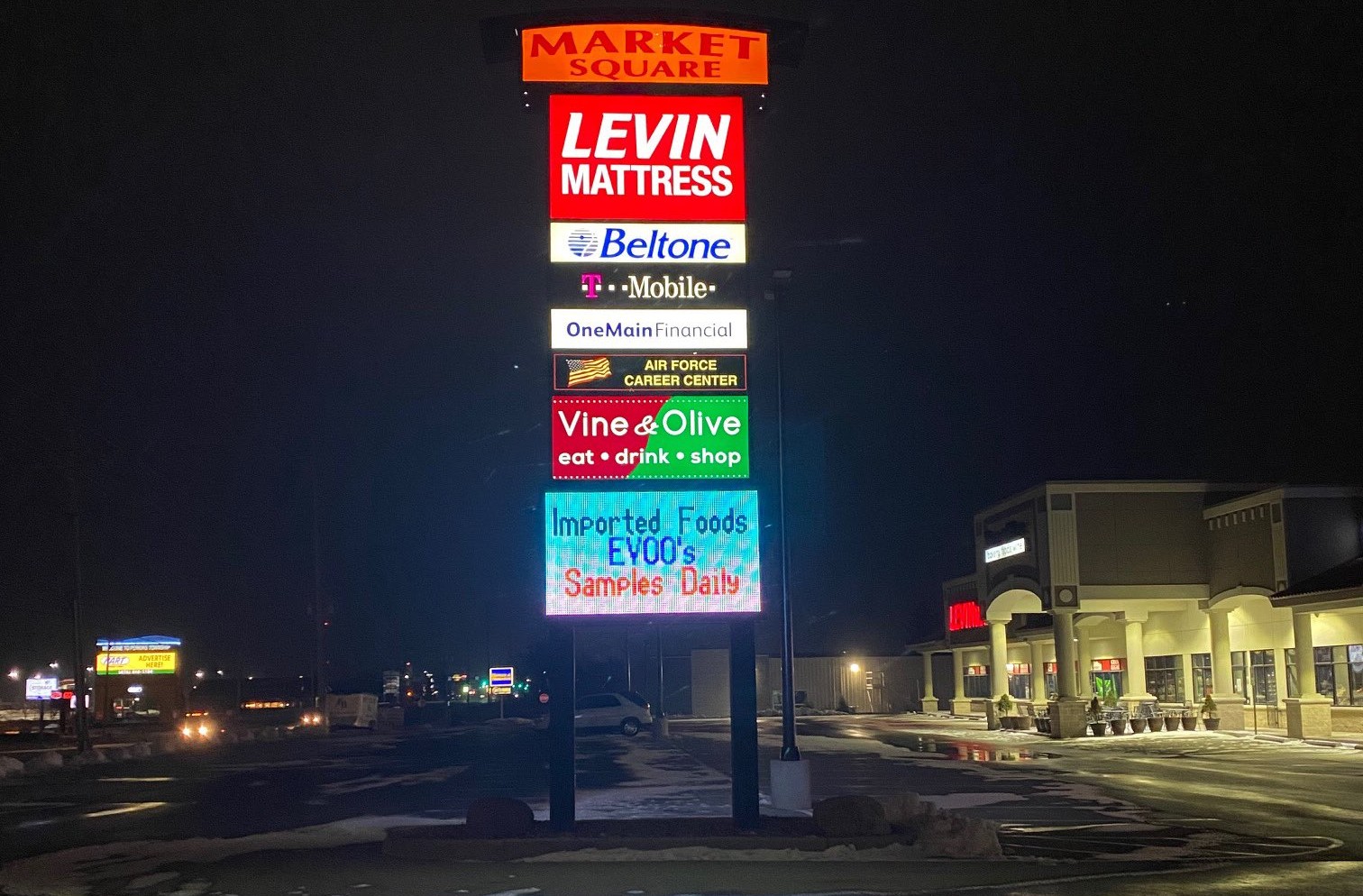
You’re losing customers you’ll never know about. It’s time for a sign visibility audit.
They meant to stop. They wanted your product or service. They drove right past your location because they couldn’t see your sign in time to react.
This happens dozens of times daily at businesses across North Central Ohio. Owners assume their signage works fine because they see it every day. Customers approaching from unfamiliar directions at actual traffic speeds experience something completely different.
A sign visibility audit reveals the gap between what you think customers see and what they actually see. Regularly conducting these audits is essential because it highlights the ongoing need to ensure your signage effectively captures attention, often shocking business owners who discover their expensive signage fails at its primary job: getting noticed.
Let’s examine how to conduct a proper visibility audit and fix the problems that are costing you revenue, so you can feel confident that your signage is working effectively.
Evaluating Sight Lines from Major Traffic Approaches
Your business sits at an intersection or along a commercial corridor. Traffic approaches from multiple directions. Your sign needs to work from all of them.
Start by identifying every route customers use to reach you:
- Primary approach from main roads or highways.
- Secondary approaches from side streets or residential areas.
- Parking lot entrances from different street access points.
- Pedestrian approaches for walkable locations.
- Delivery and service entrances, if relevant to your business type.
Now stand at each approach point and look toward your business. Can you spot your sign immediately? Does it stand out from the surrounding visual clutter? Would you recognize it if you weren’t specifically looking for it?
Common sight line problems include:
- Signs positioned perpendicular to traffic flow that work only in one direction.
- Building placement that hides signage until drivers pass the turn-in point.
- Competitor signs block the views of your identification.
- Landscaping that looked small during installation but now obscures signage.
- Utility poles, traffic signals, or street signs positioned directly in front of your sign.
Test visibility during different times and conditions:
- Morning sun creates glare that washes out sign faces.
- Evening darkness requires illumination that may not be working.
- Rainy conditions when visibility drops and drivers focus on the road rather than their surroundings.
- Heavy traffic occurs when attention gets divided between navigation and sign-spotting.
Don’t conduct this audit from your parking lot looking outward. Drive the actual routes customers take and note exactly when your sign becomes visible, giving you peace of mind that your signage is consistently effective.
Measuring How Long Your Sign Remains Visible
Visibility duration matters as much as sight line clarity. Customers need enough time to see your sign, process the information, make a decision, and execute the turn safely.
Here’s the timing challenge:
- Drivers traveling 35 mph cover 51 feet per second.
- At 45 mph, they cover 66 feet per second.
- Decision and reaction times require at least 2-3 seconds.
- Safe lane changes and turns need additional time based on traffic conditions.
Calculate your visibility window:
Measure the distance from where your sign first becomes visible to where drivers must turn because it clarifies the next step for the reader: understanding exactly how long your sign is visible to passing traffic, which is crucial for evaluating its effectiveness.
If your sign becomes visible 200 feet before your entrance and traffic moves at 40 mph (59 feet per second), customers have roughly 3.4 seconds total. That leaves maybe 1-2 seconds for actual sign reading after accounting for reaction time.
Can drivers read your business name and understand what you offer in under two seconds while simultaneously navigating traffic? Probably not if your sign uses small text, multiple messages, or complex graphics.
Visibility duration problems manifest differently across business types:
- Restaurants need customers to identify the cuisine type, not just see a name.
- Professional services need to communicate credibility quickly.
- Retail stores need to suggest product categories that interest specific shoppers.
- Service businesses need to communicate the problem they solve.
Monument signs positioned closer to main roads significantly extend visibility duration. A sign 50 feet closer to the intersection gives drivers an extra second of viewing time at 45 mph. That second determines whether they process your message or miss it entirely.
Pylon signs create visibility from greater distances, particularly for businesses set back from roads or in multi-tenant properties where building-mounted signs get lost in visual clutter. Understanding when pylon signs for businesses deliver superior results helps businesses make strategic decisions about sign type and placement.
Identifying Obstructions Blocking Your Signage
Obstructions rarely stay constant. What provided clear sight lines during sign installation five years ago might be completely blocked today.
Physical obstructions include:
- Trees and landscaping that have grown since installation.
- New construction on adjacent properties.
- Temporary construction barriers that became permanent.
- Parked vehicles, if street parking sits between your sign and traffic.
- Seasonal factors, such as leaves in the fall or snow accumulation in winter.
Visual obstructions differ from physical ones:
- Competitor signs positioned to dominate sight lines.
- Bright lights or digital displays draw attention away from your signage.
- Complex backgrounds that make your sign blend in rather than stand out.
- Color schemes that match the surrounding buildings or environments.
Walk your property quarterly, looking specifically for new obstructions. Seasonal changes reveal problems that don’t exist year-round. Winter visibility might be perfect, while summer foliage completely hides your signs.
Property owners sometimes create their own obstructions:
- Banner signs advertising sales that block permanent identification.
- Flags, promotional displays, or seasonal decorations are positioned poorly.
- Employee vehicles are parking in spots that block sign visibility.
- Temporary construction or maintenance equipment is left in place too long.
Landscaping represents the most common progressive obstruction. A tree planted 15 feet from your monument sign looked fine initially. Five years later, it’s 20 feet tall with branches extending into your sign’s sight lines. Regular trimming maintains visibility, but many businesses neglect this until customers complain about difficulty finding the location.
Municipal changes affect visibility, too. New traffic signals, street signs, or road improvements sometimes position elements directly in front of existing business signs. You can’t control these changes, but you can adapt by relocating or upgrading signage to maintain effectiveness.
Testing Readability at Actual Traffic Speeds
Your sign looks perfectly readable when you walk past it daily. Drivers approaching at 40 mph experience something completely different.
Test readability honestly:
Drive past your business at normal traffic speeds from each approach direction. Don’t slow down or focus specifically on your sign. Simulate what actual customers experience while navigating, checking GPS, and managing other vehicles.
Can you read your business name clearly? Can you identify what type of business you operate? Would you know whether your business interests you if you weren’t already familiar with it?
Record your impressions immediately:
- “Sign visible at 300 feet, but text unreadable until 100 feet.”
- “Colors blend with the building behind, hard to distinguish the sign from the structure.”
- “Multiple signs create confusion about which business is which.”
- “Illumination inadequate for evening visibility.”
Common readability failures include:
- The text is too small for viewing distance and speed.
- Low contrast between text and background.
- Script or decorative fonts that sacrifice legibility for style.
- Too much information is being crammed into multiple messages onto one sign.
- Faded colors or materials that looked sharp when new but degraded over time.
Compare your signs to competitors doing it right. Which businesses in your area have signs you can read easily at speed? What makes their signage work? Size? Color contrast? Simplicity? Strategic placement?
Professional sign companies understand the relationship between viewing distance, traffic speed, and required letter height. A sign meant for 40 mph viewing needs significantly larger text than one designed for parking lot navigation at walking pace.
The problem compounds when businesses try to make one sign serve multiple purposes. Your monument sign needs to be visible from the road. It doesn’t need to list your hours, phone number, website, and current promotions. That information belongs on window graphics or secondary signage that customers see after deciding to stop.
Sign Visibility Audit: Quantifying Lost Customers
Most businesses can’t measure exactly how many customers they lose to poor signage. But you can estimate the impact and build a business case for improvements.
Start with traffic counts:
- How many vehicles pass your location daily?
- What percentage represents potential customers (right demographics, interests, needs)?
- How many of those potential customers can’t currently see or read your signs effectively?
Apply conservative conversion assumptions:
If 5,000 vehicles pass daily and 10% represent potential customers, that’s 500 prospects. If poor signage causes even 5% of them to miss your location, you’re losing 25 potential customers per day or 750 per month.
Calculate average transaction value:
- What’s your average sale per customer?
- How many of those drive-by prospects would actually stop and purchase?
- What’s the lifetime value of customers who discover you versus one-time visitors?
Even tiny conversion rates create significant revenue impact:
If only 2% of those 750 missed monthly opportunities had been purchased, that would be 15 lost customers. At a $50 average transaction amount, you’re losing $750 per month or $9,000 annually. Over five years, that’s $45,000 in lost revenue from a problem professional signage could solve.
These calculations don’t account for word-of-mouth effects. Customers who find you easily tell others. Customers who get frustrated trying to locate you probably don’t return or recommend your business.
Compare signage investment to lost revenue:
A $15,000 sign that eliminates these losses pays for itself in less than two years. After that, it generates pure ROI through captured revenue that currently goes to competitors with better visibility.
The businesses that recognize how addressing their sign crimes directly impacts revenue make investments that competitors avoid, capturing market share simply by being easier to find.
Taking Action on Audit Findings
Conducting a visibility audit means nothing if you don’t act on what you discover.
Prioritize problems by revenue impact:
- Fix sight line issues from your primary traffic approach first.
- Address readability issues affecting the largest customer segment.
- Eliminate obstructions you control immediately.
- Plan larger investments for problems requiring new signage.
Quick fixes deliver immediate improvement:
- Trim landscaping blocking sight lines.
- Improve illumination for evening visibility.
- Remove or relocate promotional signs creating visual clutter.
- Clean and maintain existing signs to maximize current effectiveness.
Strategic improvements require investment but solve fundamental problems:
- Relocate signs to better positions with clearer sight lines.
- Increase sign size to improve readability at actual traffic speeds.
- Upgrade to monument or pylon signs if building-mounted identification fails.
- Add directional signs at decision points where customers need guidance.
Don’t let perfect become the enemy of better. You might not be able to afford the ideal signage solution immediately. Incremental improvements still capture revenue currently lost to visibility problems.
Schedule regular audits rather than one-time assessments. Visibility conditions change as properties develop, traffic patterns shift, and your own business evolves. Annual audits catch new problems before they cause significant revenue loss.
Your signage either works or it costs you money. There’s no neutral middle ground. The customers driving past represent real revenue lost to competitors whose locations are easier to find.
Brady Signs is a third-generation family business that has been a premier provider of business signage solutions throughout the North Central Ohio region and beyond for over 50 years. We’re here to discuss how our eye-catching signage can transform your brand into a statement.