
Manufacturing Facility Signs: Professional Property Identification
- April 10, 2026
- Posted by: Ryan Brady
- Category: Manufacturing Facility Signs
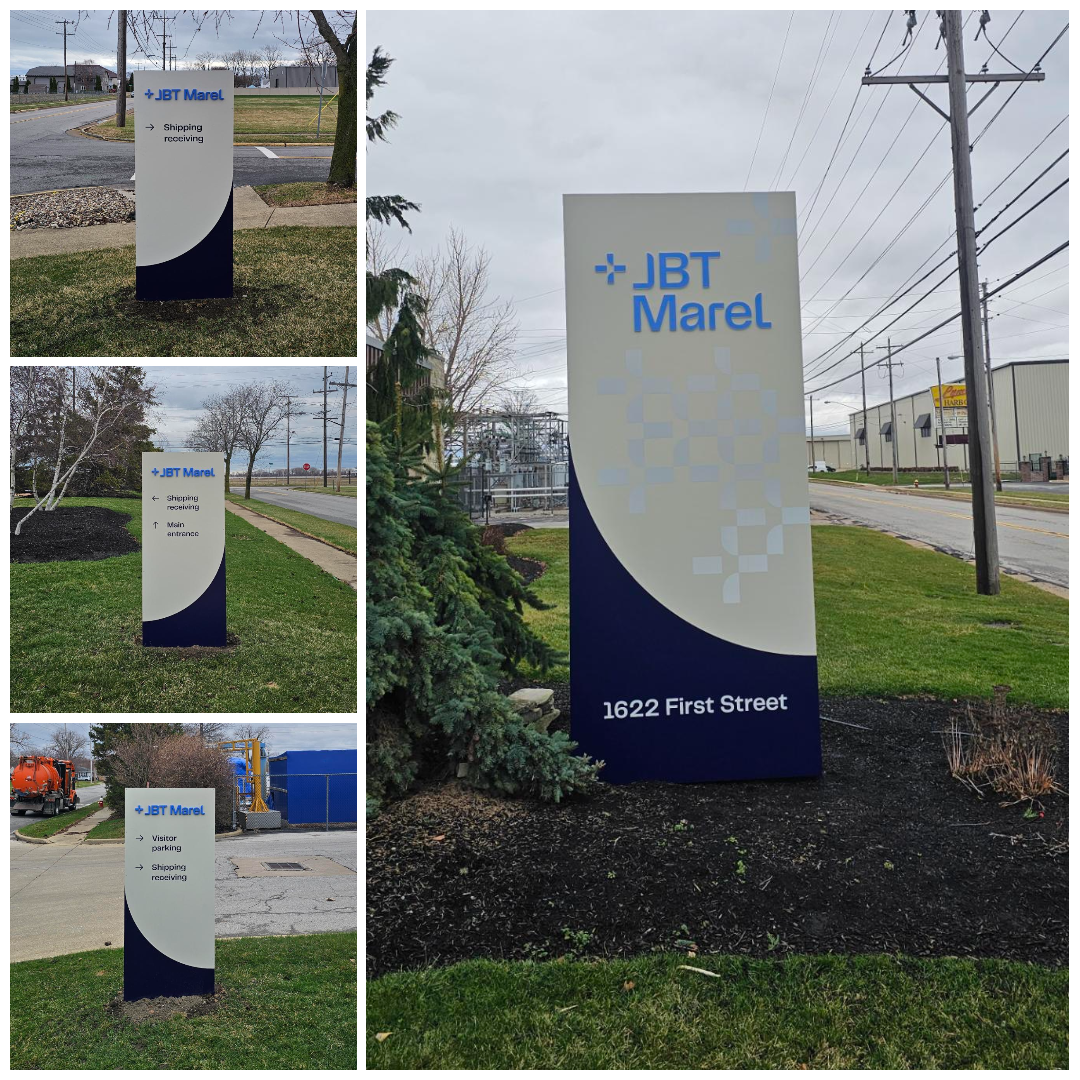
Manufacturing facilities serve business clients, not walk-in customers. Your signage needs differ from those of consumer businesses.
Professional identification builds credibility with clients and employees. Directional systems prevent lost delivery drivers, while highway visibility establishes market presence. Poor manufacturing facility signs result in wasted time, missed deliveries, frustrated clients, and lost opportunities.
Large-Scale Identification Visible From Highways
Manufacturing facilities often sit alongside highways or major arterial roads serving industrial areas. That highway visibility represents valuable marketing real estate you’re either leveraging or wasting.
Who sees your facility from the highways:
- Business clients researching suppliers.
- Prospective employees commuting daily.
- Delivery drivers spot your location from traffic flow.
- Regional economic development officials are assessing manufacturing capacity.
Your building identification needs to work at highway speeds. At 55 mph, drivers cover 81 feet per second. They need to spot, read, and process the information on your sign during the brief window when your facility is visible.
Letter height requirements scale to viewing distance:
- 10-inch letters are readable to roughly 100 feet.
- 24-inch letters are readable to roughly 240 feet.
- 48-inch letters are readable to roughly 480 feet.
Calculate your visibility window honestly. Measure the distance from your facility at which it remains visible to highway traffic. Divide by typical traffic speed. If your building sits 500 feet from the highway and traffic moves at 60 mph, drivers have roughly 5.7 seconds of total visibility.
Most facilities waste this opportunity with undersized, illegible signs. They invest thousands or millions in highway-visible real estate, only to undermine that advantage with inadequate signage at their manufacturing facilities.
Large-scale building letters create professional identification:
- Dimensional construction provides depth and shadow, improving visibility.
- Durable materials withstand decades of exposure to industrial environments.
- Professional installation ensuring letters remain securely mounted.
- Strategic positioning maximizing visibility from primary traffic routes.
For highway readability, choose high-contrast color combinations, such as dark letters on a light background or light letters on a dark background. Avoid low-contrast combinations. Prioritize visibility over aesthetic subtlety for maximum impact.
Multiple visibility angles require strategic letter placement. Facilities alongside highways need identification that is visible to traffic in both directions. Buildings positioned perpendicular to roads need letters on multiple facades.
The manufacturing facilities that understand the value of clear pylon signs visible from busy roadways apply similar visibility principles to building-mounted identification.
Manufacturing Facility Signs Guiding Delivery Drivers
Delivery drivers represent your supply chain. Confused drivers waste time, miss time-sensitive deliveries, and create operational disruptions that ripple through production schedules.
Drivers unfamiliar with your facility need clear guidance from the moment they turn onto your property:
- Which entrance do they use?
- Where’s the receiving dock?
- Which building houses the department they’re delivering to?
- Where can they turn around if they’re in the wrong location?
Missing or inadequate directional signs force drivers to:
- Stop vehicles and potentially block driveways while they figure out where to go.
- Call your receiving department and interrupt their work.
- Drive aimlessly through your property looking for loading areas.
- Deliver to the wrong buildings, requiring materials to be moved internally.
- Miss delivery windows because navigation confusion ate their schedule buffer.
Place entry-point signs to direct trucks toward visitor areas. Use clear, visible fork signs at decision points to specify destinations. Ensure building identification is visible from driveways, and mark loading docks for correct driver return.
- Fork signs at decision points indicate destinations in each direction.
- Visible building identification from driveways confirms the correct destination.
- Loading dock identification ensures drivers return to the correct locations.
- Turnaround area signs prevent dead-ending by restricting maneuvering.
Effective directional signs use text size suitable for truck drivers, clear language free of company jargon, and reflective materials or illumination to ensure visibility at all hours.
Safety Signage Integration With Brand Presentation
Manufacturing facilities require extensive safety signage to ensure regulatory compliance and protect employees. Smart facilities integrate safety signage into overall property design rather than treating it as a separate afterthought.
Integration strategies that work:
- Coordinated color schemes allowing compliance while matching facility aesthetics.
- Consistent mounting and sizing create an organized appearance.
- Strategic positioning serving functional purposes without dominating client areas.
Visitor corridors require different signs from production areas. Client tours use specific routes with professional branding, facility information, and necessary safety notices. Production floors emphasize clear safety and operational signage over branding.
Professional sign companies experienced with manufacturing facilities understand these challenges. They design comprehensive sign systems that satisfy regulatory requirements while maintaining a professional appearance essential for business credibility.
Industrial Park Visibility Among Competing Facilities
Manufacturing facilities in industrial parks face unique visibility challenges. Multiple similar buildings share the same corridors. Businesses compete for the same prospective clients, employees, and suppliers.
Your facility identification must stand out from neighbors while remaining professional for B2B environments:
- Distinctive design elements create recognition without inappropriate flashiness.
- Strategic positioning maximizes visibility from shared access roads.
- Size appropriate to viewing distances ensures you’re noticed.
- Quality materials separate you from competitors who accept cheap identification.
Common industrial park visibility problems: Identical building designs make facilities indistinguishable from one another.
- Facilities are positioned back from main roads, with poor sightlines.
- Multiple competing signs create visual clutter.
- Inadequate illumination leaves facilities invisible at night.
- Poor maintenance creates an impression of outdated or struggling operations.
Solutions that create competitive advantage:
- Monument signs near main roads for visibility before prospects turn onto your property.
- Multiple sign locations ensure visibility from different angles of approach.
- Illumination that functions reliably during all operating hours.
- Regular maintenance keeps identification fresh and professional.
The businesses that invest in comprehensive commercial property signage understand how professional identification affects property value and tenant quality.
Building Credibility With Business Clients and Employees
Professional manufacturing facility signs offer marketing benefits that many managers underestimate. Your signs create first impressions that influence business relationships.
Business clients evaluating potential suppliers drive past your facility or visit for capability assessments. What they see affects their confidence in your operational competence.
Professional signage suggests:
- Established operations with resources to invest in quality infrastructure.
- Attention to detail, likely extending to manufacturing processes.
- Organizational competence is evident in the property’s well-managed appearance.
- Financial stability allows for appropriate facility investments.
Poor manufacturing facility signs imply struggling operations, careless management, questionable viability, and potential shortcuts that may affect quality control.
These perceptions are critical for B2B relationships. To reassure clients, maintain professional, readable signage that supports confidence in your long-term capabilities and reliability as a supplier.
Prospective employees form similar impressions:
- Professional signage communicates successful operations and offers stable employment.
- Modern facilities suggest safe work environments.
- Management that invests in quality creates better working conditions.
- Company pride suggests a positive workplace culture.
Your signage shapes capability presentations and facility tours. High-quality identification sets a positive context, while poor signage undermines even strong presentations.
Investment in professional signs yields client confidence, improved recruitment and retention, stronger first impressions, and better marketing materials.
- Improved employee recruitment and retention.
- Stronger first impressions during capability presentations.
- Better marketing materials featuring professional facility images.
- Long-term brand building in regional manufacturing communities.
Manufacturing operations invest millions in equipment, facilities, and capabilities. Comprehensive professional signage represents a tiny percentage of those investments while delivering disproportionate returns through credibility that supports all business development efforts.
Brady Signs is a third-generation family business that has been a premier provider of business signage solutions throughout the North Central Ohio region and beyond for over 50 years. We’re here to discuss how our eye-catching signage can transform your brand into a statement.
